
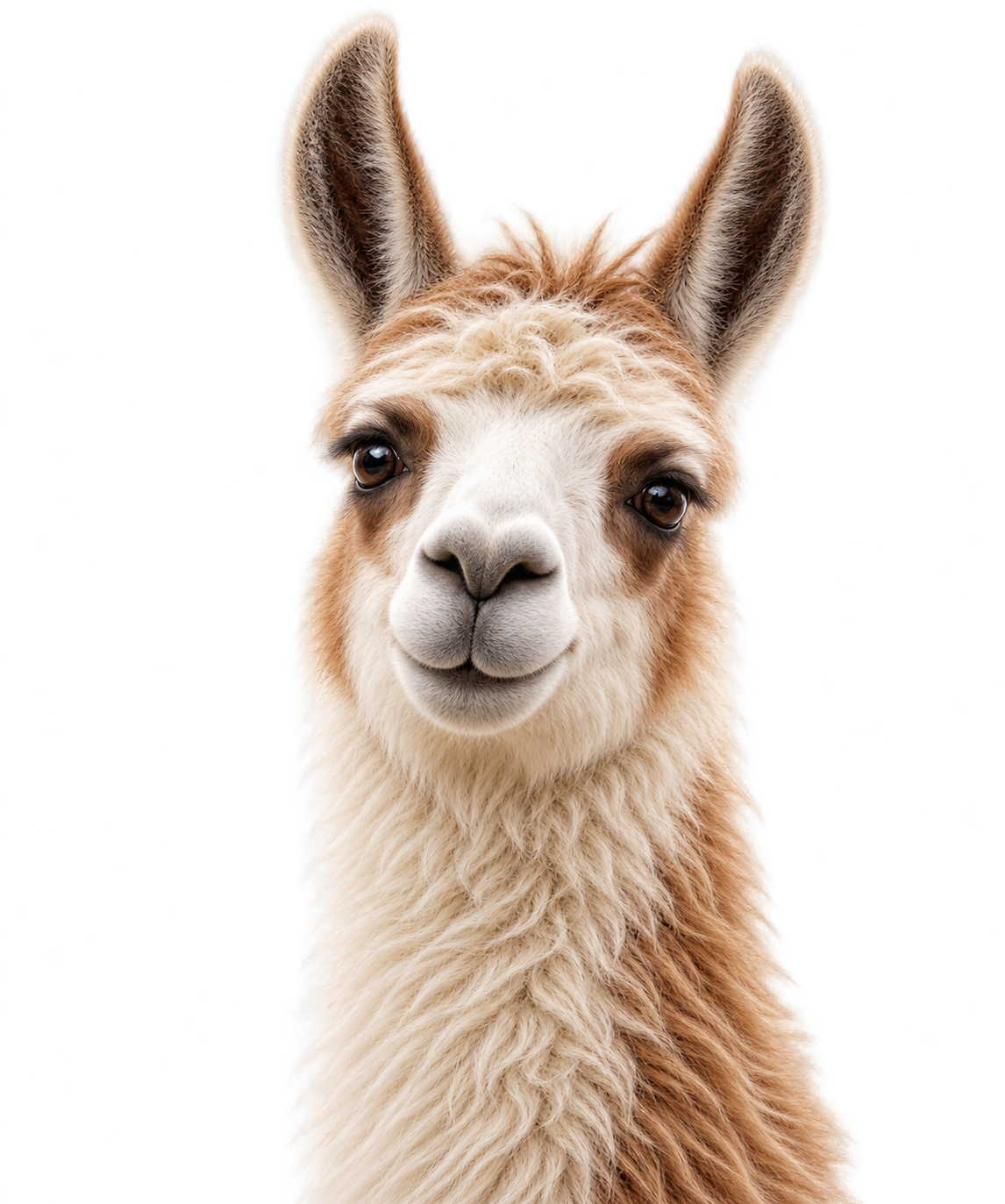
Llama Feeding and Daily Care: Forage, Safe Feed Selection and Health Monitoring
Reviewed by medical articles. Educational information, not an individual diagnosis or prescription.
Llama Feeding and Daily Care: Forage, Safe Feed Selection and Health Monitoring
**Animal:** Llama
**Topic:** Nutrition and preventive care
**Researched:** 28 October 2026
**Editorial status:** Researched draft; veterinary review pending.
**Suggested URL:** /llamas/feeding-daily-care
**Meta description:** Learn practical llama feeding checks, why cattle feed is not automatically safe, and how to organise routine care with a camelid-experienced veterinarian.
A llama is not simply a small cow or a large pet. Feeding, handling and veterinary decisions must fit the species and the individual. A sensible care plan starts with suitable forage, reliable water, a review of body condition and the right professional support. It also checks that feeds and supplements intended for other animals cannot be accessed accidentally. [1]
This guide is for owners planning daily care. It does not prescribe a ration, deworming schedule or medication dose. If a llama is not eating, is weak, has trouble breathing or appears unable to urinate, arrange prompt veterinary assessment rather than trying a general feeding tip.
Begin with an individual care profile
Record the animal's age, sex, reproductive status, approximate weight, current feed and supplements. Add previous illnesses, recent moves and herd contacts. Use actual product names and keep photographs of labels where useful.
Tell the veterinarian which observations are uncertain. Weight estimated from appearance is not the same as a measured weight, especially in an animal with a substantial coat. If measurement or body-condition assessment is needed, ask for demonstration and a repeatable method.
A care profile helps a new clinician or caregiver understand the animal. It should remain short and current rather than become a folder of outdated instructions. Keep active feeding and treatment plans clearly distinguished from historical records.
Forage and nutritional balance
Llamas and alpacas rely heavily on forage, but needs vary with body condition and physiological demands. A maintenance animal and a heavily lactating female do not automatically need identical nutrition. Excess supplementation can also be a problem. Discuss the forage and any additional feed with a camelid-experienced veterinarian or nutrition adviser. [1, 2]
Provide information about what is actually eaten, not only what is offered. In a group, one animal may have different access from another. Observe the feeding arrangement and tell the adviser about competition or difficulty chewing.
Ask whether forage testing would help answer a specific concern. An analysis is most useful when it informs a ration decision; it is not a decorative certificate that proves the entire feeding system is correct. Review changes in supply before substituting a very different forage.
Do not solve every change in condition by adding another supplement. A coherent plan considers the whole diet, and several products may overlap. Keep a list so the adviser can evaluate total intake.
Why cattle feed is not automatically safe
Some livestock feeds contain ionophores such as monensin that are highly toxic to camelids. Merck also warns about contamination risks and the consequences of inappropriate mineral supplementation, including excess copper. A feed marketed for another farm species should not be assumed suitable for a llama. [1]
Store feeds so that labels are visible and containers cannot be confused. If several species are kept on the property, assign separate equipment or a clear handling system. Do not pour an unknown feed into an unlabelled bin and rely on colour or smell to identify it later.
Before a new purchase, obtain the exact formulation and ask whether it is appropriate. A general seller assurance that “all livestock eat this” is not enough. If accidental access or poisoning is suspected, contact the veterinarian immediately and keep the packaging.
Water and feeding access
Reliable fresh water is part of camelid management. Check that the supply works and that animals can reach it comfortably. Water planning and forage management should fit the herd and the site. [2]
Look beyond the water level. Check access, contamination, competition and equipment failures. If an animal appears not to drink, report that observation rather than assuming it compensates through forage. An ill llama may need clinical support that a normal husbandry routine cannot provide.
Make feed and water checks somebody's named responsibility. A small herd still benefits from clear handovers, particularly during holidays or staff changes. The most useful routine is one that is actually performed and recorded.
Body condition beneath the coat
A full coat can hide changes in condition. Merck describes the importance of hands-on assessment rather than visual appearance alone. Ask the veterinary team how to assess the appropriate regions and record changes consistently. [1]
Do not treat a single number as a diagnosis. Appetite, weight trend, examination and other findings may all matter. If condition changes unexpectedly, review the history with the veterinarian rather than adjusting food repeatedly without investigation.
Use the same method and, where practical, the same trained observer. Record who made the assessment and what method was used. This makes trends more understandable than a sequence of unlabelled estimates from several people.
Signs that deserve veterinary attention
Reduced appetite, weight loss, weakness, diarrhea, unusual movement or urinary difficulty are reasons to contact a veterinarian. Camelids can develop significant disease, and nutritional support may need to be part of treatment. Not eating should not be dismissed as stubbornness or managed by waiting for the animal to become hungry. [3]
Breathing difficulty, collapse or inability to pass urine requires urgent advice. Describe the actual signs and their timing. Do not force oral liquids or attempt a procedure in an animal that is distressed or swallowing poorly.
Ask in advance which clinic handles camelids and how emergencies are arranged. A saved contact is more useful than searching for the right service after an animal becomes severely ill. Keep transport arrangements and identification records accessible.
Parasite management needs a plan
Parasite risks and drug effectiveness vary with conditions and location. Resistance is a significant concern in camelids, so repeating a calendar deworming routine without assessment is not a reliable strategy. Ask about testing, pasture management and evaluation of treatment response. [4]
Do not copy a horse or cattle dose, or guess weight to make a product last longer. If treatment is prescribed, use the veterinarian's instructions for the actual animal and keep a record. Tell the clinician about every recent dewormer, including the formulation and time given.
A negative test or a visually healthy animal does not answer every parasite question. Let the veterinarian explain the limits of the method used and whether follow-up is needed. Good management combines information rather than relying on one reassuring observation.
Social needs, handling and routine care
Llamas and alpacas are social animals. Appropriate companionship and a low-stress handling plan should be considered alongside disease-control requirements. Properly fitted equipment and trained handling are important; a distressed animal can injure people. [1]
Discuss routine foot care, shearing, dental needs and preventive health with the veterinary team. Keep the plan specific to the animal and local risks. Do not assume a care schedule from a different country or climate transfers unchanged. [4]
For a new animal, ask about introductions and biosecurity before mixing it with the herd. Record the history, any test results and the professional advice received. A period of apparently normal behaviour is not a substitute for an appropriate introduction plan.
A caregiver handover sheet
| Item | Detail to record |
|---|---|
| Feed | Forage, authorised supplements and exact products |
| Access | Which feeding and water areas the animal uses |
| Observations | Appetite, manure, urination and behaviour changes |
| Routine care | Current veterinary, foot and coat-care arrangements |
| Treatments | Product, time and instructions from the veterinarian |
| Emergency | Clinic contact and transport arrangements |
The sheet is an organisational aid. It does not diagnose disease or establish that an animal can safely remain at home. A new serious sign takes priority over completing the form.
Frequently asked questions
**Can a llama eat any cattle feed?** No. Formulations may contain ingredients hazardous to camelids. Verify the exact product with a qualified adviser. [1]
**Does a thick coat mean good body condition?** No. Learn an appropriate hands-on assessment method rather than relying only on appearance. [1]
**Should I deworm every month automatically?** Develop a local, veterinary-directed parasite plan rather than applying a universal calendar. [4]
**Can I use this as an individual ration prescription?** No. The animal's condition, forage and physiological needs must be assessed.
Sources
1. Merck Veterinary Manual, [Management of Llamas and Alpacas](https://www.merckvetmanual.com/exotic-and-laboratory-animals/llamas-and-alpacas/management-of-llamas-and-alpacas).
2. Penn State Extension, [Llamas and Alpacas: Nutrition and Feeding](https://extension.psu.edu/animals-and-livestock/llamas-and-alpacas/nutrition-and-feeding).
3. Merck Veterinary Manual, [Diseases of Llamas and Alpacas](https://www.merckvetmanual.com/exotic-and-laboratory-animals/llamas-and-alpacas/diseases-of-llamas-and-alpacas).
4. Merck Veterinary Manual, [Herd Health of Llamas and Alpacas](https://www.merckvetmanual.com/exotic-and-laboratory-animals/llamas-and-alpacas/herd-health-of-llamas-and-alpacas).
**Smoki editorial note:** Care profiles, feed-bin organisation and handover forms are original organisational suggestions. No veterinary reviewer, universal ration or individual medication instruction is claimed.